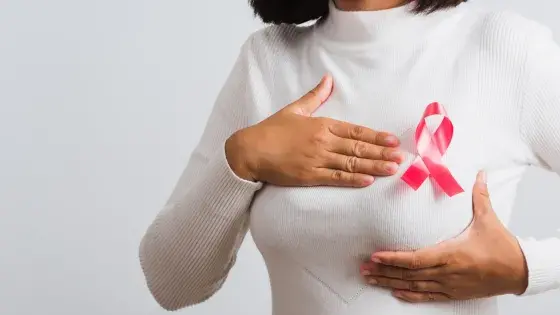
Most of us are aware that checking our breasts is important, but what exactly should you be checking for?
With October marking Breast Cancer Awareness Month, we talk you through how to check your breasts, how often you should be doing it and the signs and symptoms to look out for. We also explore why knowing what’s normal for your body is so important and debunk some common breast cancer myths.
Getting to know your normal
Knowing what’s normal for your own breasts means you're more likely to notice if something isn’t right.
Hormonal changes, periods, pregnancy, breastfeeding, menopause, weight changes and ageing can all affect how your breasts look and feel, so your ‘normal’ may vary over time. But getting into the habit of checking them regularly means you’ll become familiar with what’s usual for your body at different stages of life, making it easier to recognise anything new or unexpected.
Below, we explain how to check your breasts if you’re not sure where to start.
How to check your breasts
When checking your breasts, it's a good idea to both look and feel.
Look
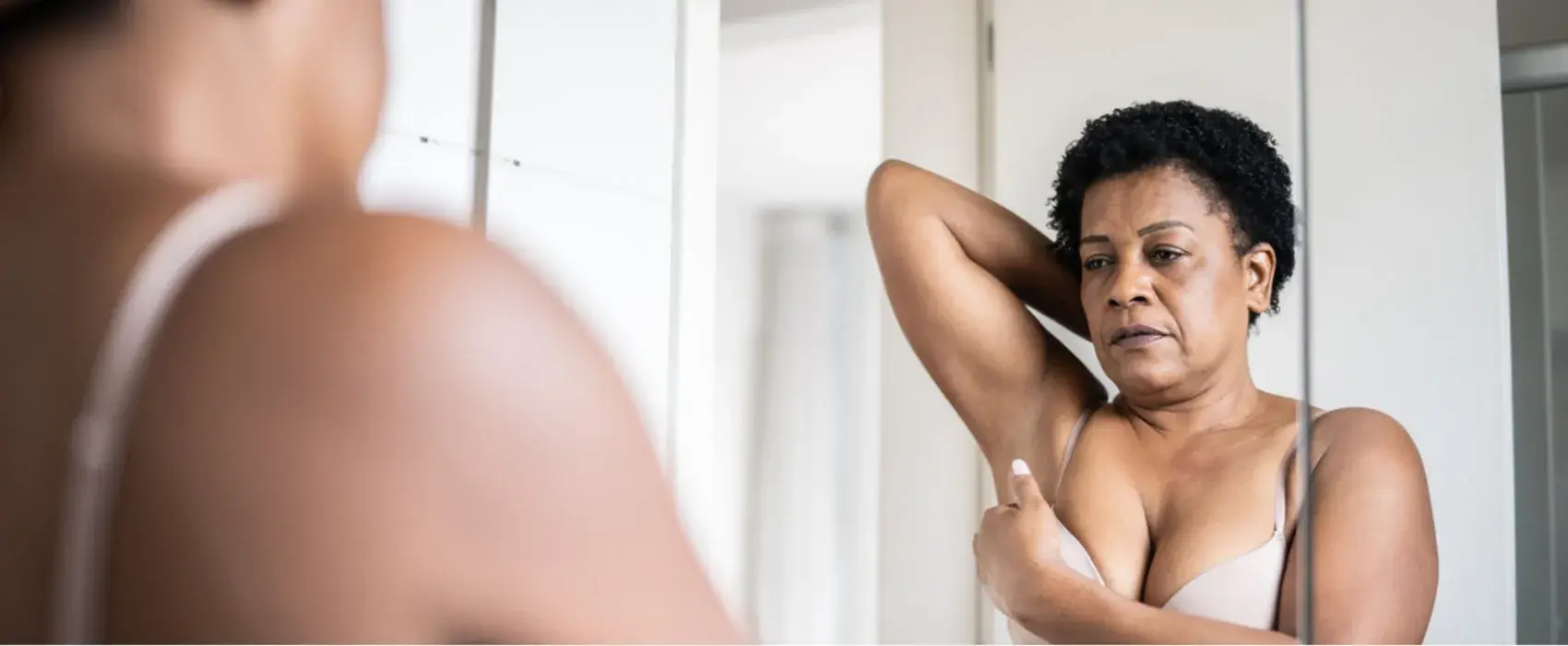
- Stand in front of a mirror and check your breasts with your arms by your sides and then raised above your head.
- It’s normal for one breast to be larger than the other, but look out for any changes in size, shape or appearance that aren’t typical for you.
- Check for any unusual skin dimpling, puckering or redness
- Look for any changes to the nipple (for example, the nipple being pulled inwards or changing direction, any rash or crusting on or around the nipple, or any discharge).
Feel
- You can do this in front of a mirror, in the shower or while lying down, whatever you find most comfortable.
- Use the flat pads of your three middle fingers and press in small circular motions
- Check all areas of the breast, including around the armpits and up to your collarbone.
- Breasts can naturally feel bumpy or fibrous, but notice if you have any unusual lumps, particularly if these are hard or feel different to the surrounding breast tissue.
- Also look out for any thickening or swelling, or any unusual or persistent pain in your breast, chest area or armpit.
When to check your breasts
You should check your breasts regularly. If you still have periods, it is good to try to check them around the same time each month. Adding a monthly reminder to your calendar can help you make breast awareness part of your routine.
If you notice anything that’s unusual for you or doesn’t feel quite right, make an appointment to see your GP.
Breast cancer myths: separating fact from fiction
Misunderstanding about breast cancer can sometimes prevent people from checking their breasts or seeking advice when they need it. Here, we debunk some of the most common myths.
Myth: Breast cancer only affects women
Although breast cancer is much more common in women, men can develop it too. Anyone who notices changes in their chest area should speak to a healthcare professional.
Myth: If I'm young, I don't need to check
While the risk of breast cancer increases with age, it can also affect younger people, including those in their teens and twenties. If you notice any symptoms, it’s important not to dismiss them because you think you're ‘too young’.
Myth: A lump is the only sign of breast cancer
While a lump is one possible sign of breast cancer, it isn’t the only symptom. Changes in breast shape or appearance, skin texture or the nipple can also be signs, as can pain that’s unusual or doesn’t go away.
Myth: If it doesn't hurt, it can't be serious
Many breast cancers do not cause pain, particularly in the early stages. Any persistent or unusual change should be checked whether it hurts or not.
If you're worried, get it checked
Most breast changes won’t be cancer, but it's still important to have them assessed by a healthcare professional. Getting checked can provide reassurance and, if treatment is needed, early diagnosis can improve outcomes.
If you’d like more information and guidance, take a look through the resources below.
Related content